
Interacting with kids with clubfoot
It was a memorable and emotional visit to the Government Hospital, Dindigul, for all the 30 children from the Interact Club of SBC Academy on Diwali 2025 as “they not only mingled with the clubfoot toddlers and their parents, but also listened to a doctor’s briefing on the cause and effects of this muscular deformity. The twisted inward leg syndrome is a birth defect that can be detected in the foetal growth in pregnant women,” says Aarthy Mukesh, executive secretary, RC Dindigul Queencity, the all-women’s club in RID 3000 which sponsors this Interact club.
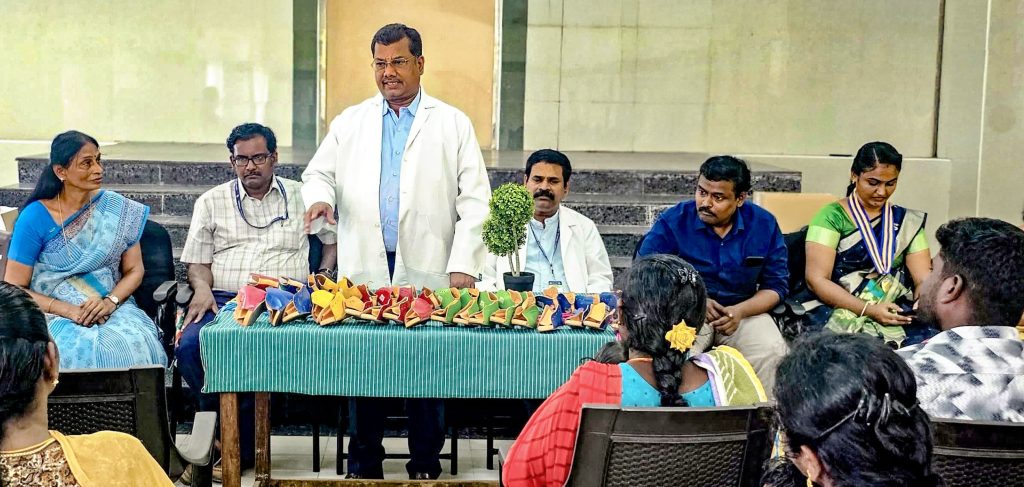
Since inception two years ago, the Interact club is being mentored by the school correspondent Aarthi Senthilkumar and the faculty “so that they can reach out to the less privileged in the community, and feel the joy of giving. They get to know the challenges and hardships being faced by the marginalised during their community work,” explains Aarthy. She is also the editor of the club’s monthly bulletin Queen’s Heralds.
Our dedication and strong will to carry on with the project despite hurdles have brought smiles on the faces of clubfoot children which can’t be quantified or described in words.
– Malliga Chinnaswamy, past president, RC Dindigul Queencity
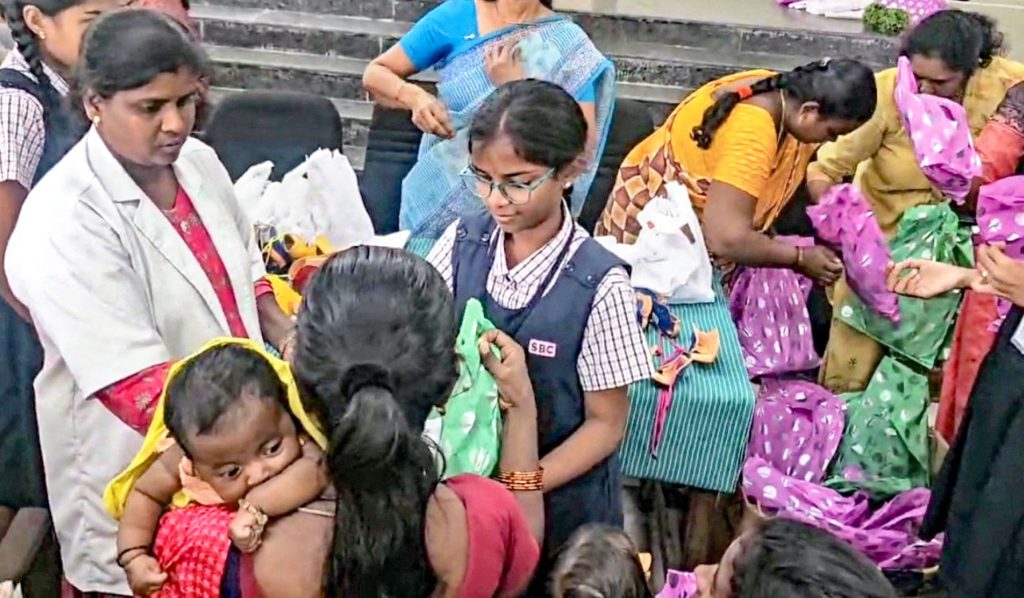
Dindigul Queens had prepared a list of 130 clubfoot toddlers being treated at the GH, categorising them based on age, gender and size, and this data was given to the Interactors well in advance. They took the toddlers’ list with them, and informed their parents about “their proposal of gifting them Diwali dresses to clubfoot children at the GH.” With monetary help from parents, Interactors bought new clothes worth ₹75,000 based on the age-gender-size list “so that the dresses fit nicely on the toddlers whose age varies from just one month to 6–7 years.” The new dresses were sorted and nicely packed before they were handed over to 115 clubfoot children in person. “They had a surplus of 25 dresses which were distributed among the toddlers who were present.”
During the briefing by the doctor, the Interactors, all students from Class 8–10, were stunned to know that clubfoot sets in unborn babies in mother’s womb, and “if not detected at the right stage, this congenital defect will paralyse the legs arresting children’s growth.” All the students witnessed the treatment being given to toddlers fitted with special shoes, and “their parents were happy that their wards had a chance to learn something useful at very early age in their lives,” says Aarthy.
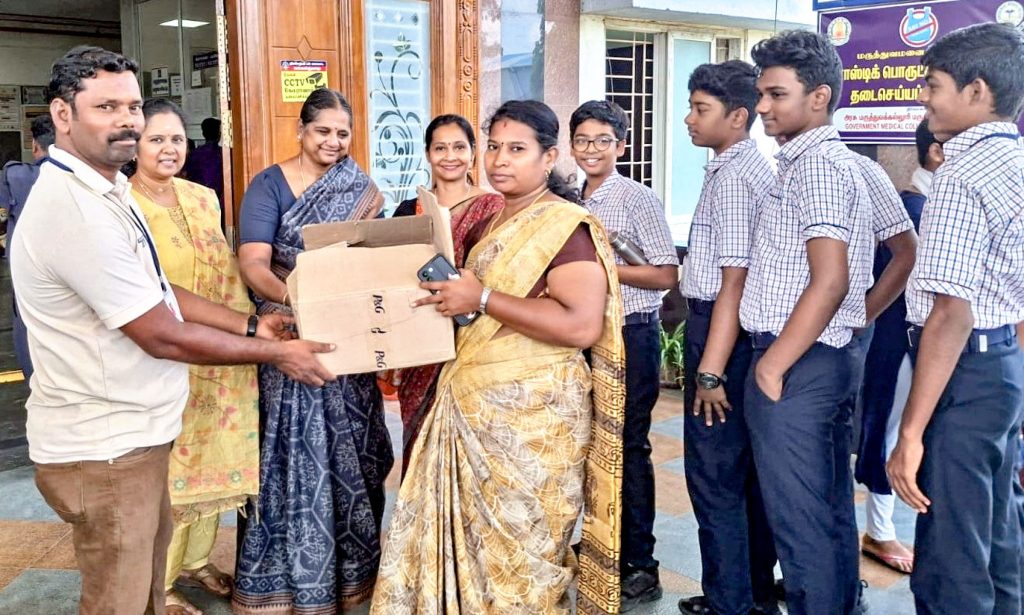
On their part, Dindigul Queens thanked parents for funding their children to buy dresses for toddlers and clubfoot kids. Rotarians sponsored sweets and food items like snacks, worth ₹7,000, that were distributed to all participants. On the way back home, Interact club president P K Prahalya (Class 9) said, “it felt amazing to bring happiness to those in need, while the joy and gratitude on the faces of these clubfoot children filled us with immense satisfaction.”
Clubfoot project
Dindigul Queens have tied up with the GH and Delhi-based Cure India, a pharma firm that makes special shoes for clubfoot, to provide treatment for newborns and toddlers affected by this leg deformity. The project was initiated eight years ago by the then club president Malliga Chinnaswamy who is also the major sponsor of the annual events being done for the special children at the GH. “Every year, we spend ₹2 lakh for children’s treatment including the procurement of special shoes, apart from spending around ₹40,000 for gifts and foods distributed to the toddlers,” explains Aarthy. From 130 toddlers, the number of clubfoot patients has grown to 175 including newborns, as the hospital is now getting more numbers of toddlers from Madurai and other areas, thanks to their effective treatment boosting its public image through word of mouth.
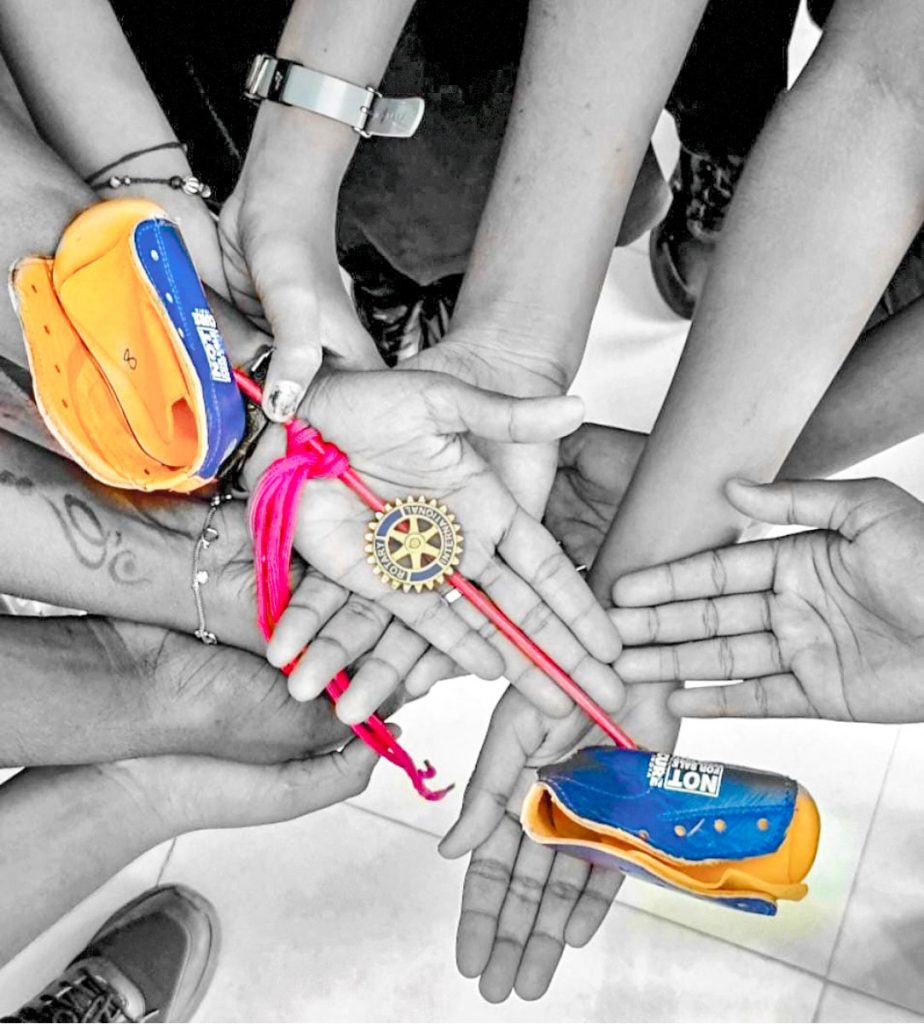
Cure India has appointed Geetha, a paramedic, at the GH, and she visits primary health centres and government hospitals across Dindigul to identify pregnant women carrying clubfoot babies through scanning. She counsels the expectant mothers, if they carry a clubfoot baby, and their families, “and makes sure that the newborns are brought to the GH for regular treatment.” It takes a maximum of seven years for a complete treatment and cure of clubfoot deformity, and Dindigul Queens liaise between the ortho department of GH and Cure India to fill gaps in the treatment procedure.
Recalling the project’s journey so far, Malliga says, “our dedication and strong will to carry on with the project despite hurdles have brought smiles on the faces of clubfoot children which can’t be quantified or described in words.” But on a serious note, Aarthy says, “being an all-women’s club in a small town in southern Tamil Nadu we find it difficult to raise funds for our clubfoot project. Hence, we will be happy if some large-hearted Rotarians help us to sustain our project in the coming years.”
The 27-year-old all-women’s club has so far sponsored 12 Interact and three Rotaract clubs.
