
One family, One vision
Rotaract is not the future of Rotary. Rotaract is the present of Rotary,” said RI President Francesco Arezzo, addressing district Rotaract leaders at the Tejas zone institute in Delhi. He explained that Rotary functions in a rapidly changing, fluid society, “very different from the world of founder Paul Harris.”
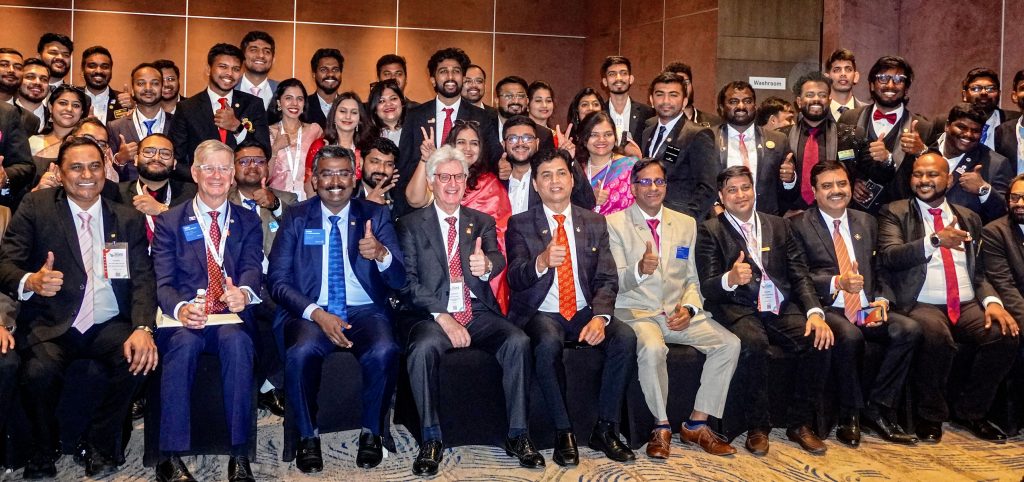
While Rotarians often recognise change only after it has occurred, Rotaractors “live the change, feel the change and understand what is changing,” he said. Rotary therefore needs Rotaract to remain relevant, to understand new forms of communication and evolving community needs. At the same time, Rotaract needs Rotary’s experience, because “the future comes from our past.” Calling it a win–win relationship, he urged Rotary and Rotaract to plan, study communities and execute projects together. “We are great together; we cannot survive alone,” he said.
RI director K P Nagesh highlighted the importance of nurturing the next generation early, while also strengthening Rotary’s own diversity. He noted that women’s membership in Rotary in India currently stands at around 17 per cent, with a focused push to reach 30 per cent. While gender balance is not a concern in Rotaract and Interact, he emphasised the need to introduce Rotary’s values and vision to young people at an early age, ensuring continuity of leadership and service.
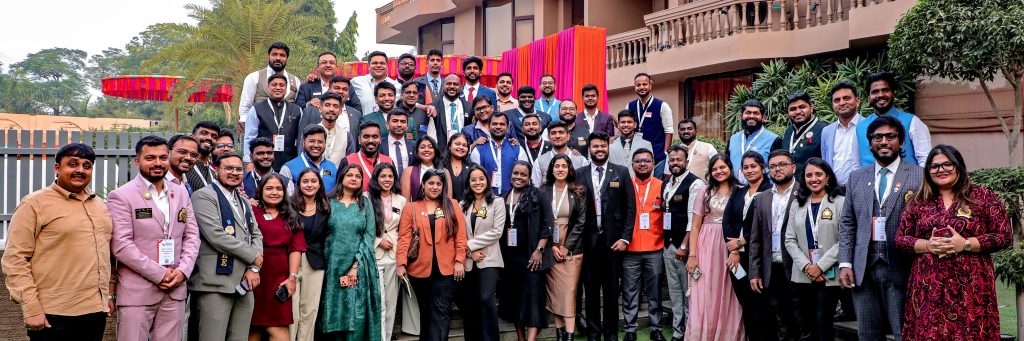
If the Rotary wheel is to rotate for decades to come, Rotaract and Interact must be central to Rotary’s strategy, said RI director M Muruganandam. “When we dream together, think together and work together, growth is not an option, it is an outcome,” he added. He called for innovative club models, and proposed the 1:2:3 approach — each Rotarian to introduce two Rotaractors and three Interactors, and each Rotary club to sponsor two Rotaract and three Interact clubs.
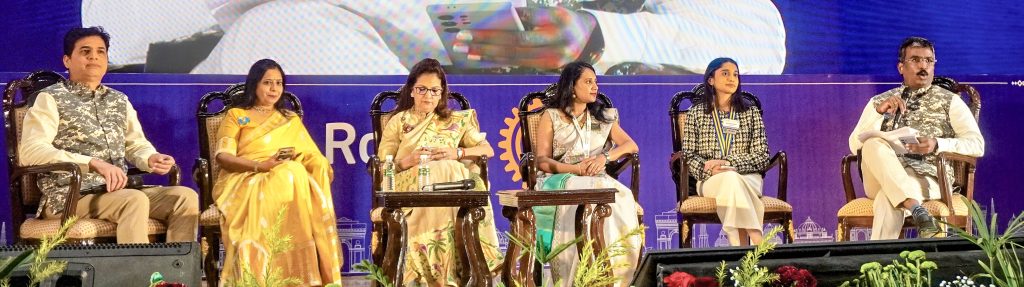
A panel discussion titled Unite to Grow, moderated by both the directors, highlighted the advantages of the collective strength of Rotary, Inner Wheel, Rotaract and Interact.
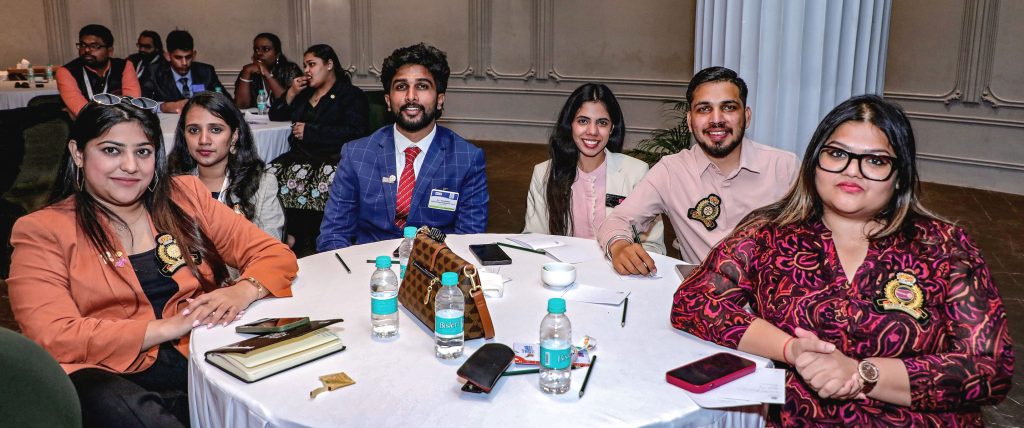
District Rotaract Representative Janice Philip described Rotaract as the momentum behind Rotary’s impact. “Rotaractors bring speed, agility and the ability to start anything from scratch,” she said. As digital natives, Rotaractors can provide visibility and scale by harnessing technology to run synchronised initiatives across districts and countries. She proposed a shared annual service calendar focusing on key causes such as polio eradication, health, environment, cervical cancer prevention and women’s empowerment. Emphasising integration at the club level, she said, “It is no longer Rotary and Rotaract. It has to be Rotary with Rotaract.”
Janice also highlighted Rotaract’s growing commitment to TRF, including aspirations to collectively contribute to the Polio Fund and work towards a Rotaract-led Arch Klumph Society–level contribution in India, with support from Rotarians and Inner Wheel members.
District Interact Representative Aahana Roy shared how joining Interact at age 12 instilled empathy and social awareness. “Interact taught me that even two minutes with someone can mean the world to them,” she said, recalling visits to NGOs supporting the elderly and children. She described Interactors as bringing spark and creativity, Rotaractors bringing innovation, and Rotarians, vision. “Rotary is the soil, Rotaract is the sunlight and Interact is the seed that brings tomorrow’s hope,” she noted. Aahana advocated mentorship opportunities and greater involvement of Interactors in Rotary initiatives to build confidence and leadership early.
Jyoti Mahipal, national president of Inner Wheel, showcased how Inner Wheel complements Rotary’s mission through impactful projects such as Sparsh Ek Ehsaan, which addresses child abuse awareness, along with human milk banks and cervical cancer vaccination initiatives. Sharing her personal journey, she said Inner Wheel transformed her from a shy homemaker into a confident leader. “What I could not do professionally, I could do through Inner Wheel,” she said, recalling how initiatives such as the Praram Montessori House and Gyan Jyoti scholarship programme that she had initiated as president are now permanent projects of her Inner Wheel club. Inner Wheel is not just about service, but about lifelong friendships, confidence and purpose, she noted.
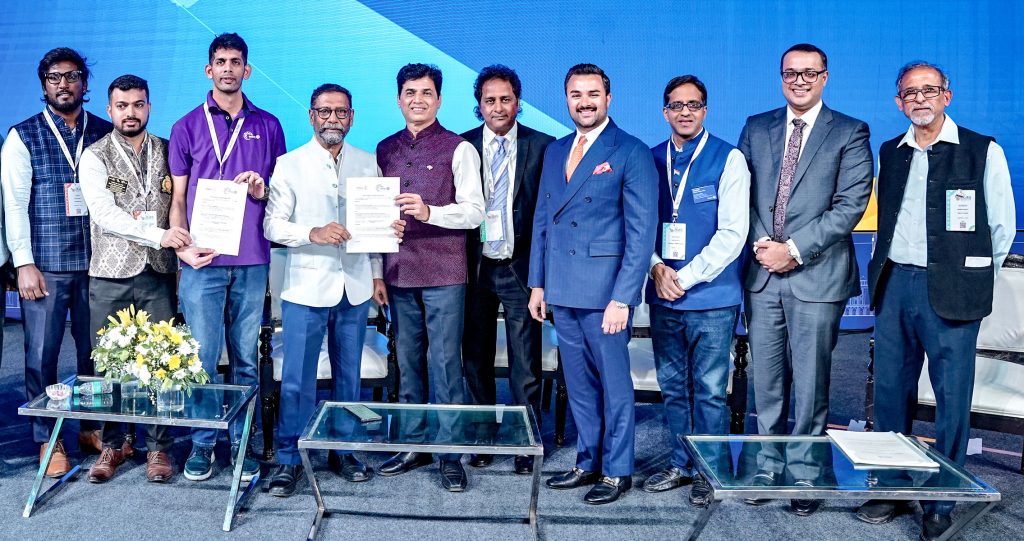
Three major collaborations were announced at the institute by session chair PDRR Karthik Kittu — a partnership between Rotaract South Asia Multi District Information Organisation and the Rotary Environment Foundation to promote Project Dakoju Dhanyavad focusing on large-scale tree planting and ecosystem creation across villages; a partnership with the Head Held High Foundation to create 10–20 model AI villages across India by empowering rural communities with AI literacy; and with Culkey Foundation and GoI’s Ministry of Tourism to empower local artisans and self-help groups to strengthen livelihoods through art, culture and eco-tourism.
